
If you have ever sat in a CPG meeting and heard someone casually drop “how many eaches per case?” or “we need to change the dieline before we can lock the SRP”, you know the feeling. The conversation is moving, decisions are being made, and you are quietly trying to figure out whether “eaches” is even a real word.
Coming from a tech background, I had the same experience when I joined the snacking world. So this post is the cheat sheet I wish I had on day one — a visual glossary of CPG packaging terms, written for technologists and anyone else who walks into these conversations cold.
Why Tech Folks Should Care
You might be thinking: I work on websites and content platforms. Why do I need to know what a tertiary pack is?
A few reasons:
- Asset systems mirror packaging structures. When you work on DAM, PIM, or e-commerce platforms in a CPG company, the data model often reflects the physical pack hierarchy. Knowing what each layer is makes the data model click.
- Photography and rendering briefs use this vocabulary. “We need a hero shot of the secondary pack on shelf” means something very specific. Misreading it costs studio time.
- Conversations are faster. You stop having to silently translate every other sentence.
Now let’s get into the terms.
The Packaging Hierarchy: Think Nesting Dolls
The cleanest way to picture packaging is as a set of nesting dolls. The smallest doll is the product itself. Each layer around it exists for a different audience — the consumer, the retailer, or the logistics team.
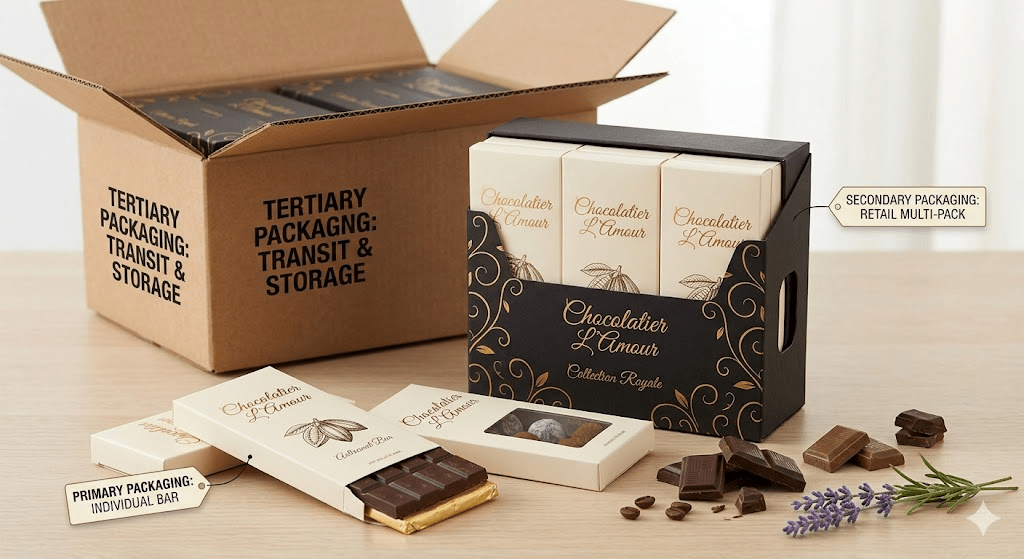
Let’s go from the inside out.
Primary Pack
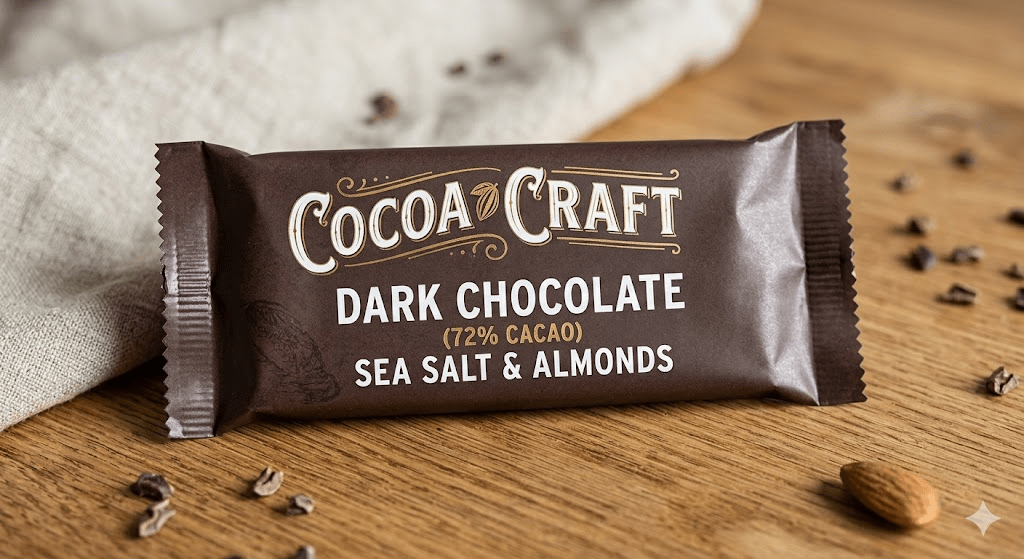
The packaging that directly touches the product. This is what the consumer tears open. Examples: the foil wrapper around a chocolate bar, the sealed film around a snack bar, the plastic tray inside a biscuit box.
The primary pack does three jobs at once — it protects the product, it carries regulatory information (ingredients, allergens, nutrition), and it delivers the brand experience the shopper takes home.
Secondary Pack / Outer
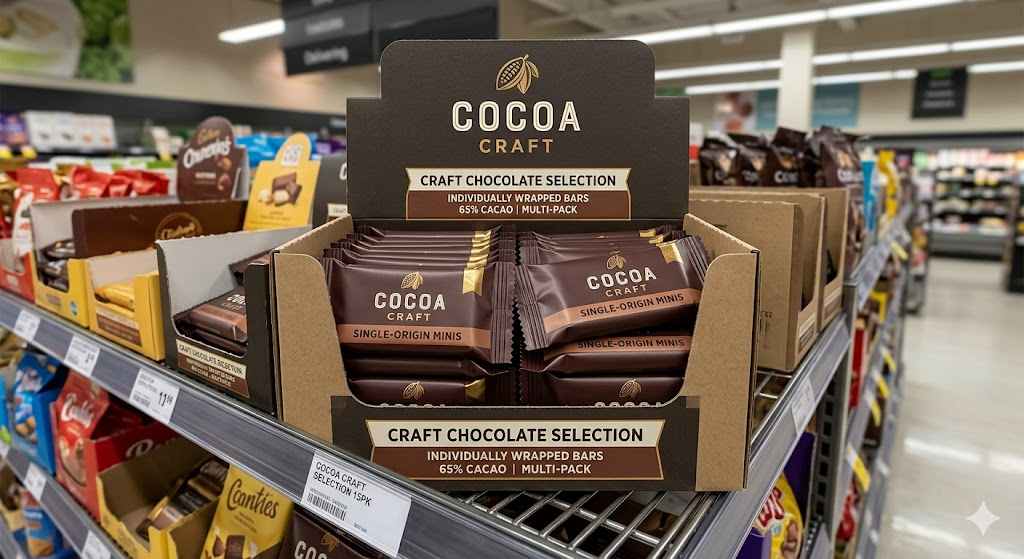
Groups multiple primary packs together. This is what you typically see on the retail shelf. Examples: a cardboard box holding four biscuit sleeves, a printed carton containing six individually wrapped granola bars.
The secondary pack has a different job. It needs to win attention in a three-second window as a shopper walks past the aisle. That is why secondary packs carry the loudest brand storytelling — bigger logos, on-pack promotions, recipe ideas. It is the shelf billboard.
Tertiary Pack / Case
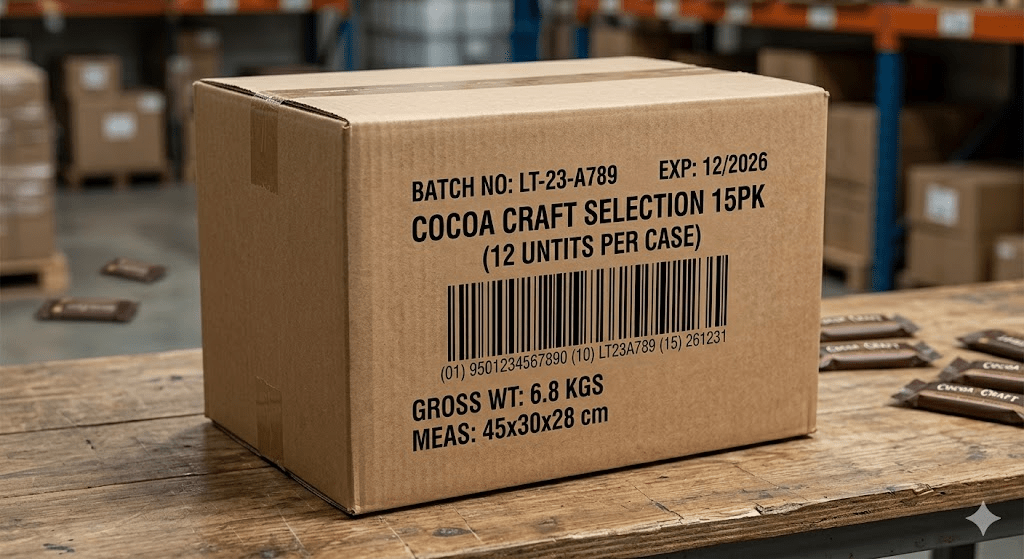
The shipping container that holds multiple secondary packs. This is what travels from the factory to the warehouse to the store’s back room. Examples: a corrugated brown cardboard box holding twelve retail outers of biscuits. It will usually carry an barcode, batch codes, and pallet configuration markings.
Tertiary packs are not designed to be pretty. They are designed for efficient stacking, scanning, and transport. The dimensions and weight here directly affect logistics cost per unit.
Pallet
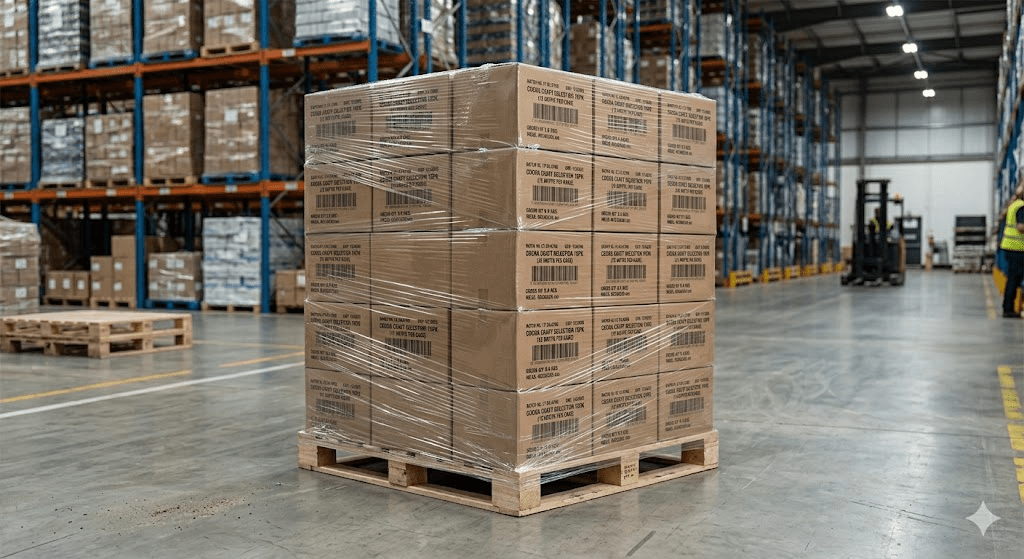
Multiple cases stacked on a wooden or plastic pallet, shrink-wrapped together for bulk transport. Example: forty-eight cases of snack bars stacked in a specific configuration (called a pallet pattern) and wrapped in stretch film for stability.
Here is a catch: pallet configuration is not just a logistics afterthought. It is calculated to maximize truck space and minimize transport cost. A case that is two centimetres too tall can mean one less layer per pallet — and a measurable hit to the cost-per-unit shipped.
Common Pack Formats
Not every primary pack looks the same. Here are the formats you will most often see in snacking and confectionery.
Sleeve
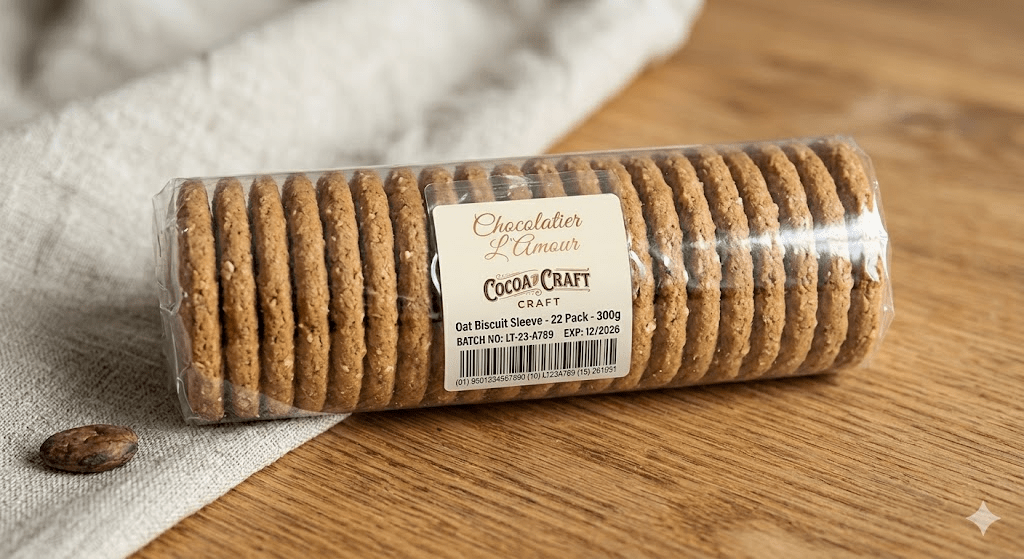
A tube-shaped wrapper holding a row of products — usually biscuits or cookies. Example: the long cylindrical pack inside a biscuit box, holding a single row of cookies stacked end-to-end.
Flow Wrap
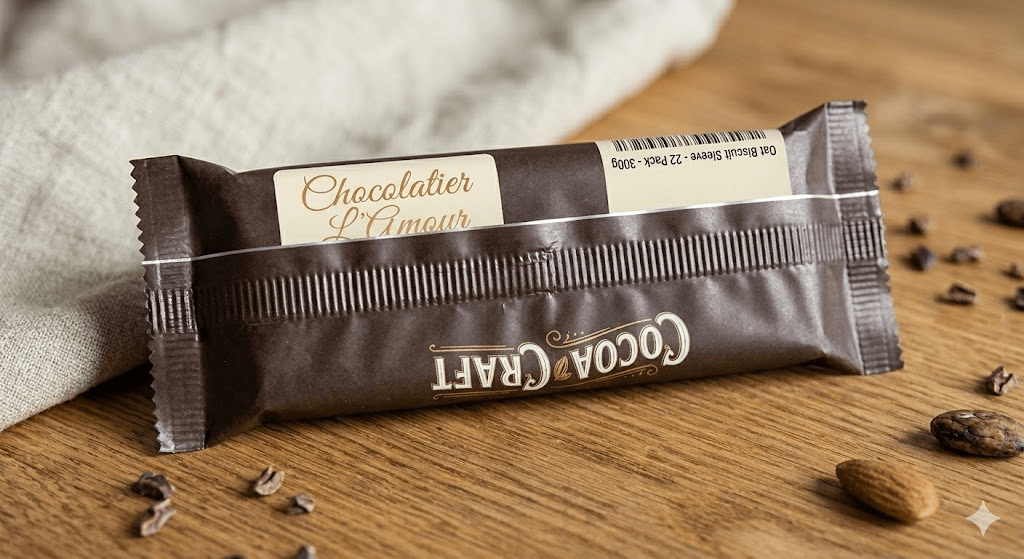
A sealed flexible film that “flows” around the product on the packaging line. The most common format for single bars. Example: the wrapper on a single chocolate or cereal bar, sealed at both ends with a fin seal running along the back.
If you have ever wondered why most bar wrappers have that distinctive ridge along the back — that is the fin seal where the film meets itself and gets heat-sealed.
Pouch / Stand-Up Bag
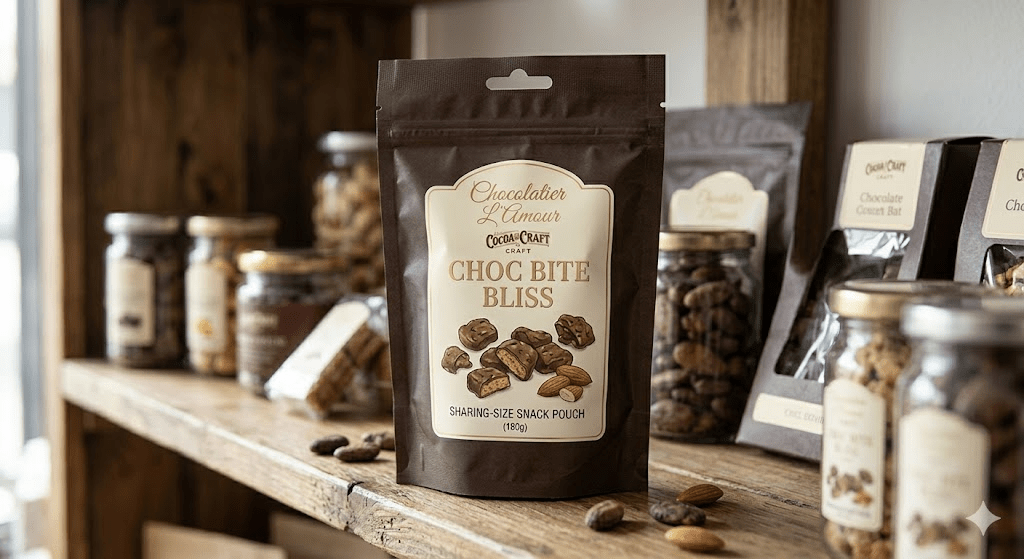
A flexible bag, usually with a flat bottom (called a gusset) so it can stand upright on shelf. Example: a sharing bag of chocolate buttons or a resealable bag of gummy candy.
Carton
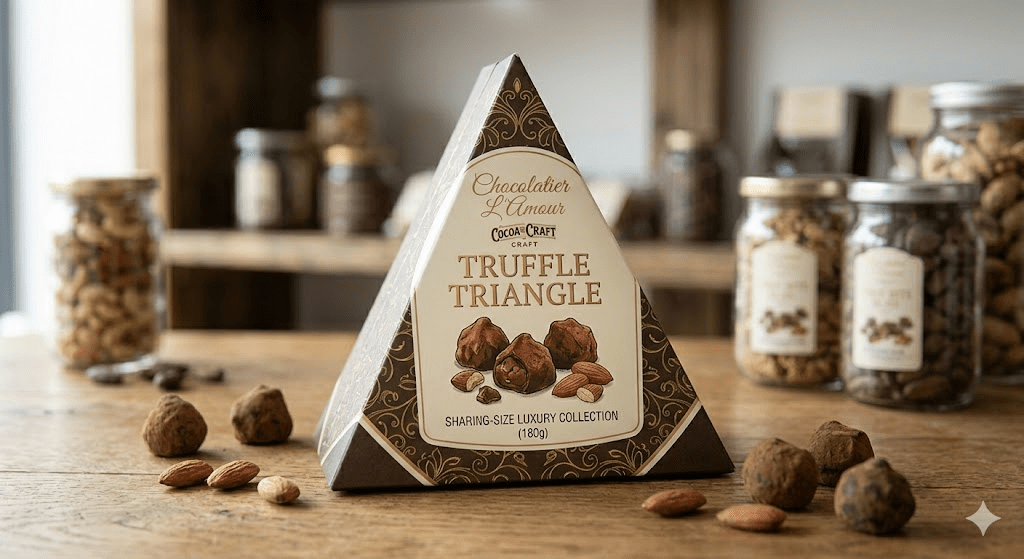
A folding cardboard box — rigid enough to stand on shelf, printed with full brand artwork. Example: a triangular chocolate gift box or a rectangular biscuit carton.
Tray
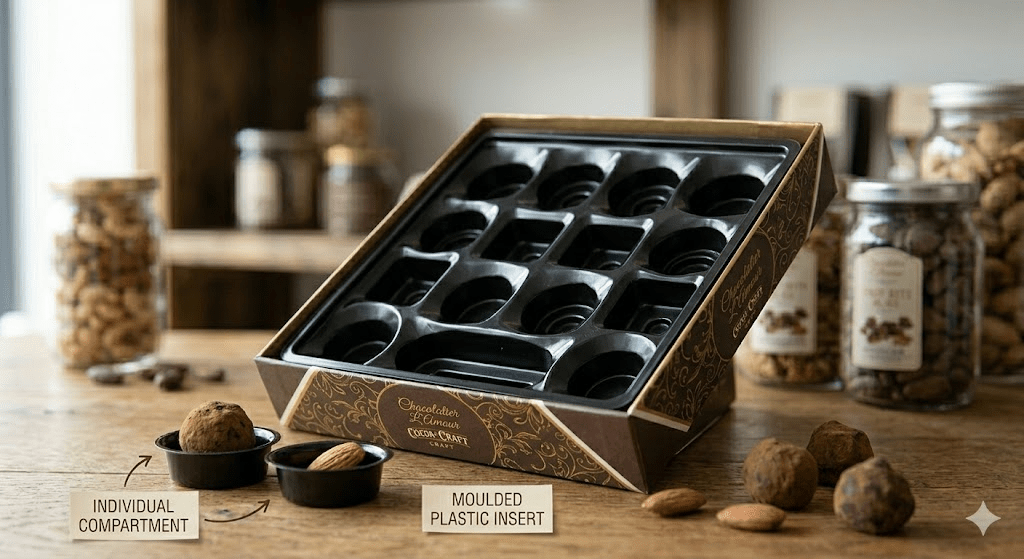
An open-top shallow container, often nested inside a carton or used as a display unit. Example: the moulded plastic tray inside a premium chocolate box that holds each piece in its own compartment.
Blister Pack
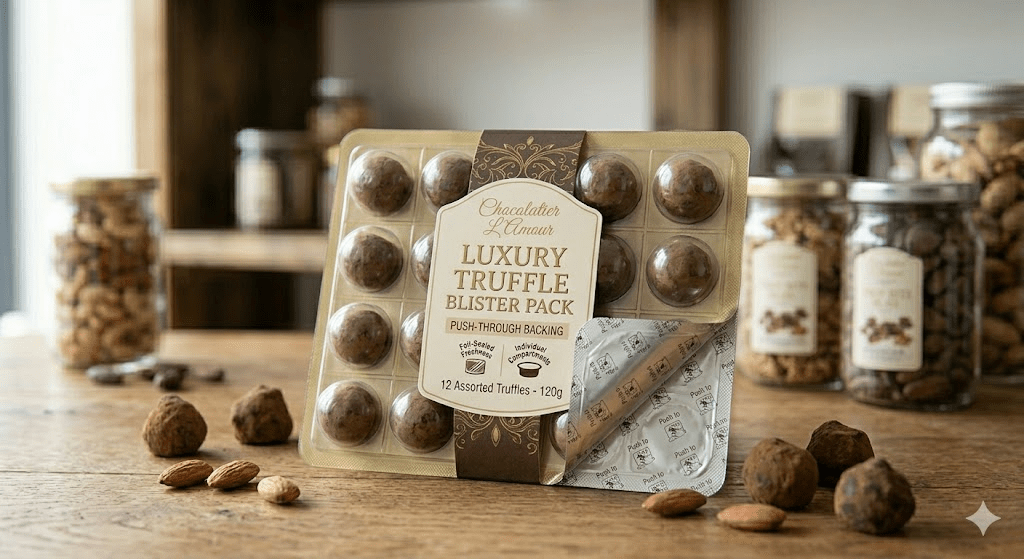
A clear plastic mould sealed to a printed card or foil backing. The product sits inside the bubble and you push or tear it out. Example: a pack of chewing gum where you push each piece through the foil backing.
Tin / Canister
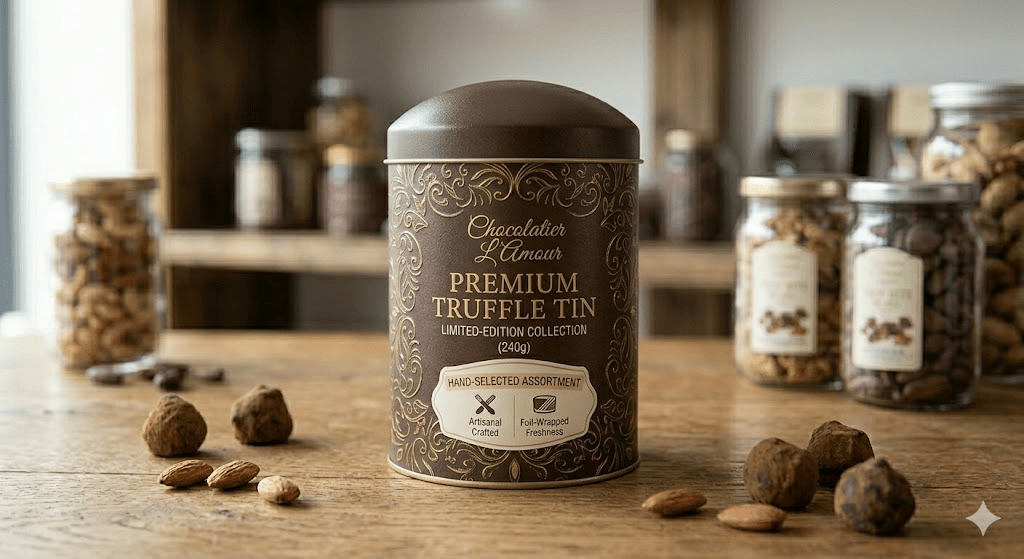
Rigid metal packaging, usually reserved for gifting, premium ranges, or seasonal products. Example: a holiday cookie tin or a limited-edition chocolate canister.
Retail and Logistics Terms
This is where the vocabulary gets dense. Don’t worry — these are the terms you will actually hear most often in CPG meetings, so they are worth knowing.
Eaches
A single sellable unit. One bar. One bag. One box. The individual item a consumer takes off the shelf.
When you hear “how many eaches per case?”, the answer is the count of individual products inside one shipping carton. This is one of the most frequently asked questions in supply chain conversations.
SKU (Stock Keeping Unit)
A unique identifier for each distinct product variant. Every combination of brand + flavour + size + market is a different SKU.
Example: a 110g milk chocolate bar and a 200g milk chocolate bar of the same brand and flavour are two different SKUs. Add a French-market version with translated nutritionals, and you have a third.
This is the term that bridges marketing, supply chain, finance, and your e-commerce platform. SKU counts drive forecasting, factory line scheduling, and storefront catalog complexity all at once.
SRP (Shelf-Ready Packaging)
A case specifically designed to go straight from the shipping pallet onto the retail shelf. The store associate cuts along the perforated tear strip, lifts off the top, and places the entire tray on the shelf — no need to unpack individual units.
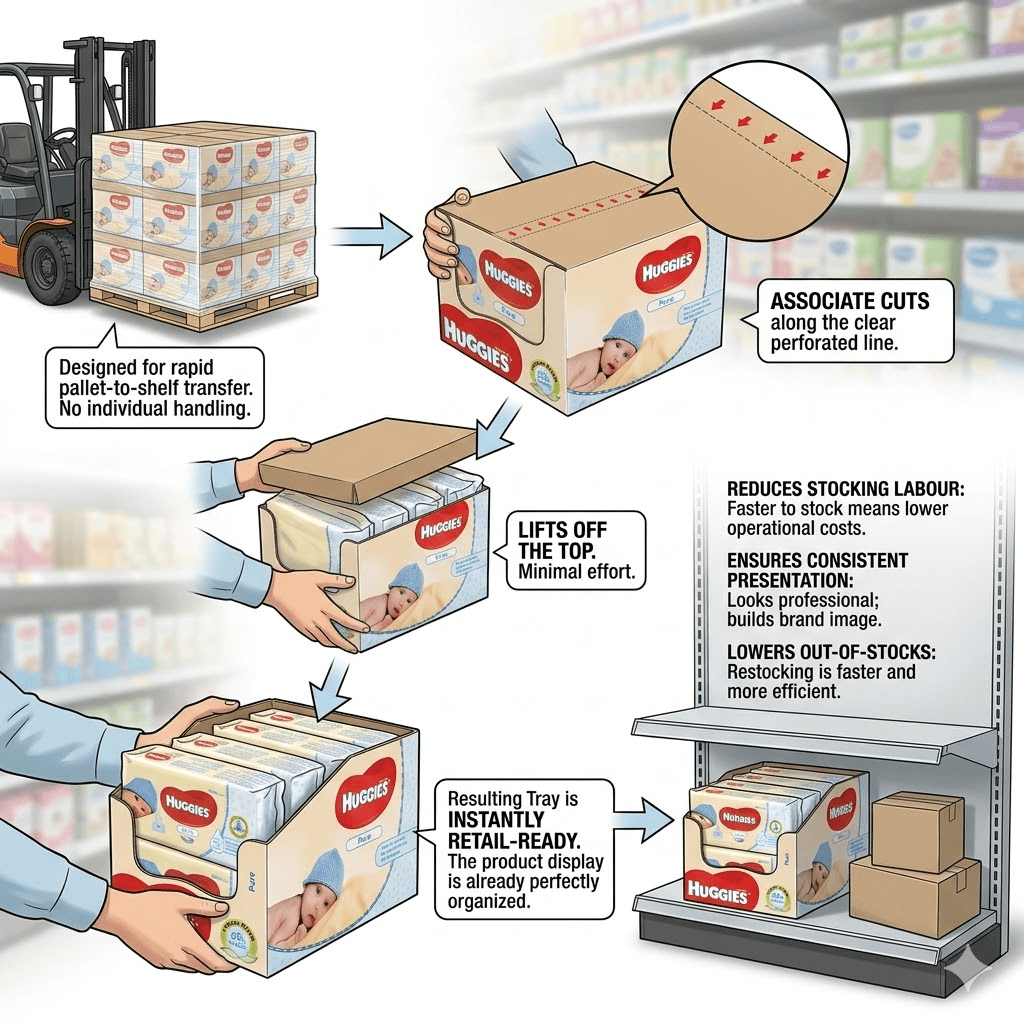
Why retailers love it: it reduces stocking labour, ensures consistent shelf presentation, and lowers out-of-stock incidents. Why CPG companies invest in it: it earns better shelf placement and stronger retailer relationships.
Shipper Display
A shipper display (also called a “floor shipper” or “ready-to-display shipper”) is a pre-filled, self-contained display unit that arrives at the store already packed with product. The retailer just unboxes it, places it on the sales floor, and it’s ready to sell from — no assembly, no manual stocking. It’s essentially packaging + display + shipping container rolled into one.
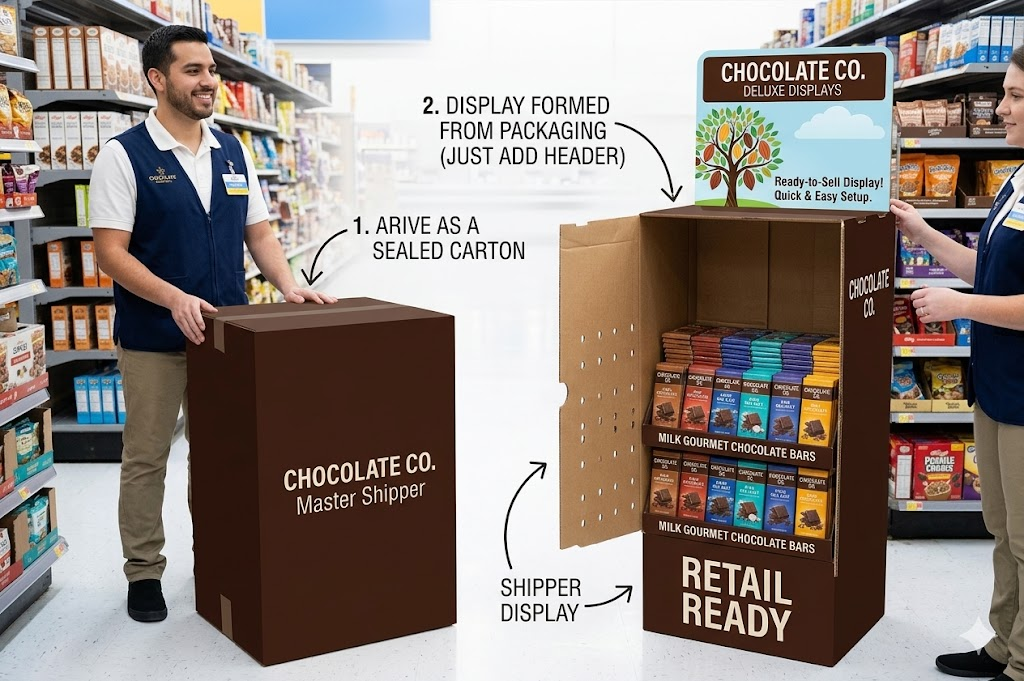
Key traits:
- Floor-standing, usually waist-to-chest height
- Made of corrugated cardboard (occasionally wood or plastic for premium brands)
- Holds a large quantity of product — often a full case or more
- Placed in aisles, endcaps, or open floor space
- Typically used for promotional pushes, seasonal launches, or new product introductions
- Designed to be disposable after the product sells through
POS (Point of Sale) Display
A POS display sits at or near the checkout counter, right where the customer is paying. Its job is to trigger impulse purchases in the final seconds of the shopping trip — candy, gum, batteries, lip balm, phone accessories, magazines, small toys.
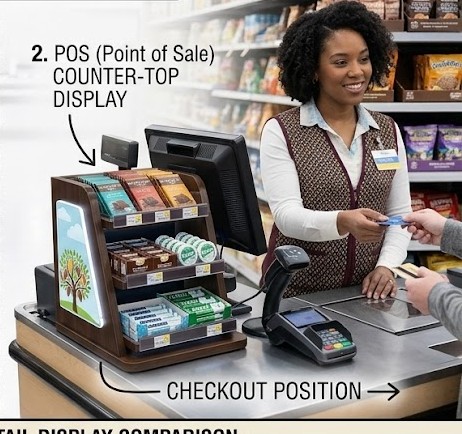
- Focused on last-minute conversion, not category discovery
- Small and compact — designed to fit on a counter or hang near the register
- Often countertop, sometimes a small floor unit beside the till
- Holds small, low-priced items (impulse-friendly price points)
- Can be cardboard, acrylic, metal, or plastic — often more durable since it’s a fixture
- Placed specifically at checkout zones, not in aisles
Multipack
Multiple individual packs bundled together and sold as one unit. Example: a five-pack of breakfast biscuit packs wrapped in a printed outer film.
Variety Pack
A multipack containing different flavours or variants inside one outer. Example: an assorted crisps pack containing cheese, salt and vinegar, and BBQ flavours.
Quick Reference
If you only remember one table from this post, make it this one.
| Term | What It Is | Audience |
|---|---|---|
| Primary pack | Wrapper directly touching the product | Consumer |
| Secondary pack | Outer holding multiple primary packs | Consumer (on shelf) |
| Tertiary pack / Case | Shipping carton holding secondary packs | Warehouse, store back room |
| Pallet | Stack of cases on a wooden/plastic base | Logistics, transport |
| Each | A single sellable unit | Supply chain, finance |
| SKU | Unique identifier for each product variant | Everyone |
| SRP | Case designed to go straight onto shelf | Retailer |
| Shipper display | Case that unfolds into a branded stand | Retailer, shopper |
| POS display | Standalone promotional unit in-store | Shopper |
| Multipack | Bundle of identical packs | Consumer |
| Variety pack | Bundle of different variants | Consumer |
Packaging in CPG is a layered system, not a wrapper. Each layer serves a different audience — the consumer wants storytelling, the retailer wants stocking efficiency, the warehouse wants stackability, the truck wants cube optimization. Once you can see those layers separately, the meetings stop sounding like a foreign language.

